
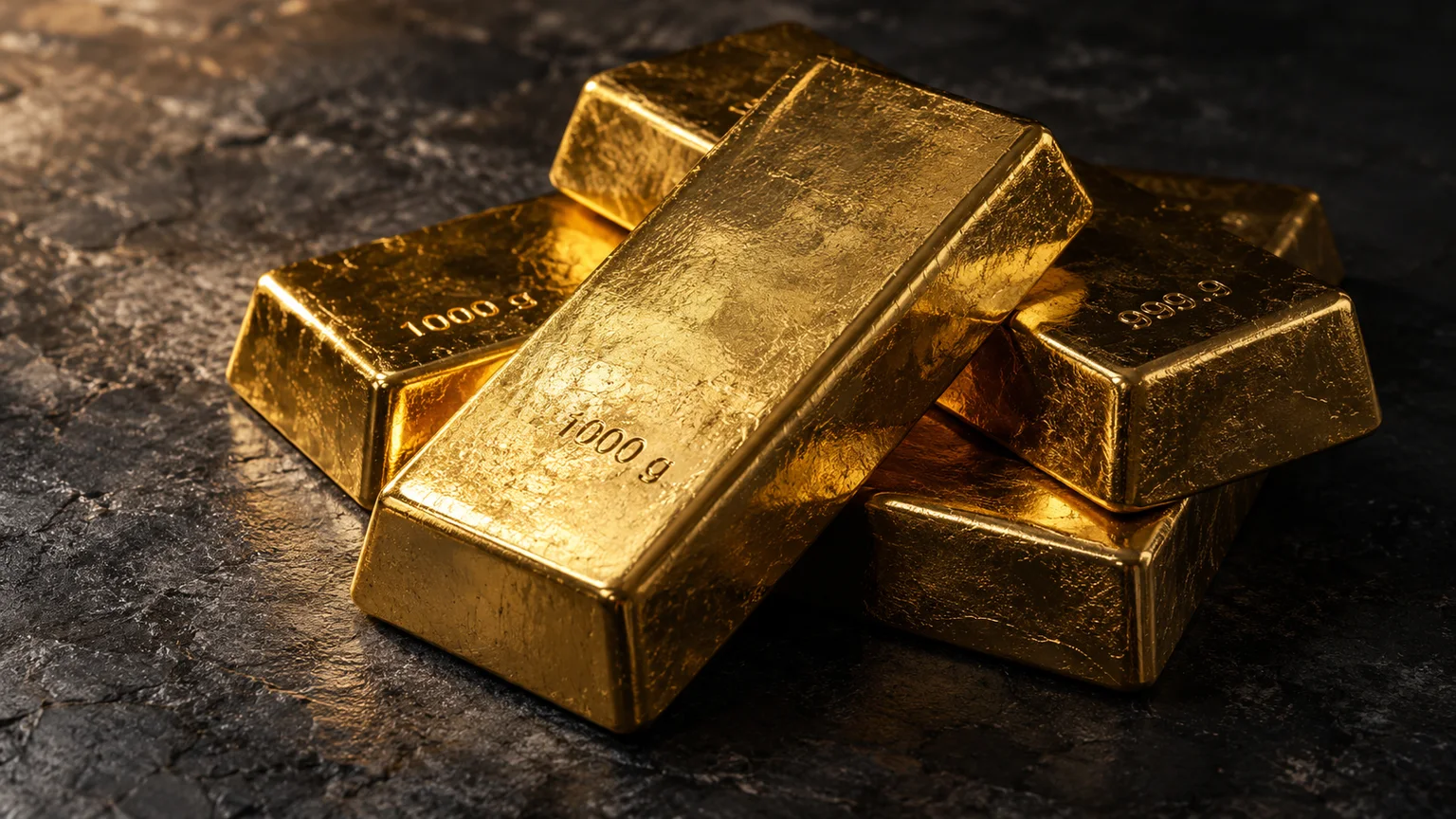
Gold: A Decade of Growth That Captured Investors' Attention
Ten years ago, gold was trading near $1,320 per troy ounce.
By early October 2026, its price had climbed above $4,100.
Over that period, the precious metal more than tripled in US-dollar value.
For investors who purchased gold a decade ago and maintained their holdings, the appreciation could have been substantial.
Gold's historical performance demonstrates the potential for long-term appreciation
Gold Price Performance (2016–2026)
View the source observations
| Observation | USD / oz |
|---|---|
| 2016 year-end | $1,145.90 |
| 2017 year-end | $1,291.00 |
| 2018 year-end | $1,279.00 |
| 2019 year-end | $1,514.75 |
| 2020 year-end | $1,887.60 |
| 2021 year-end | $1,805.85 |
| 2022 year-end | $1,813.75 |
| 2023 year-end | $2,078.40 |
| 2024 year-end | $2,609.10 |
| 2025 year-end | $4,367.80 |
| October 1, 2026 (partial year) | $4,177.39 |
Only these 11 observations are shown. Lines connect observations; they do not represent verified intervening daily prices.
The article’s approximately $1,320 reference is the September 30, 2016 LBMA PM price ($1,322.50). The chart uses a separate, consistently sourced annual series. Reference
Why Are Major Financial Institutions Still Buying Gold?
Gold remains one of the world's most established reserve assets.
According to the World Gold Council, central banks purchased a net 863 tonnes of gold in 2025.
Poland was among the largest buyers, adding approximately 102 tonnes to its reserves during the year.
Central banks use gold as part of their strategies for reserve diversification and managing long-term financial risks.
However, central-bank purchases primarily involve traditional reserve gold and should not be confused with institutional adoption of tokenized gold.
Meanwhile, some private investment companies are beginning to explore alternative ways to hold exposure to precious metals.
Major Investors Are Exploring Digital Gold
In January 2026, leading cryptocurrency publication CoinDesk reported on Aurelion, an investment company that incorporated Tether Gold (XAUt) into its corporate treasury strategy.
Aurelion CEO Björn Schmidtke raised an important question about gold investing:
How does an investor actually own gold?
Traditional financial instruments can provide exposure to gold prices, but ownership rights and custody structures may differ significantly.
Tokenized gold introduces another model.
Physical gold remains in custody, while a corresponding digital asset can be held and transferred through blockchain infrastructure.
Aurelion's decision illustrates how one corporate investor is approaching tokenized gold. It does not establish that tokenized gold is preferable for all institutional investors.
Source: CoinDesk, January 25, 2026. Original source
Tether Gold: Physical Gold in a Digital Format
Tether Gold (XAUt) is a digital token backed by physical gold.
According to its issuer, each full XAUt token represents one fine troy ounce of physical gold associated with an identifiable gold bar.
Investors do not necessarily need to acquire an entire token.
Through supported services, eligible users may be able to purchase fractional amounts of XAUt, subject to platform conditions and applicable restrictions.
For example, 0.01 XAUt corresponds to one-hundredth of a fine troy ounce of gold under the token's backing structure.
This creates an alternative to purchasing an entire physical gold bar and arranging personal storage.
However, owning XAUt is governed by the issuer's terms and is not identical to personally possessing physical bullion.
Tether Gold and Trust Wallet: Making Digital Gold More Accessible
One of the important developments in digital assets is the ability to manage gold-backed tokens through cryptocurrency wallets.
Trust Wallet is a widely recognized self-custody cryptocurrency wallet supporting various blockchain assets.
Users can explore Tether Gold (XAUt), check token compatibility across supported networks and manage compatible assets using wallet functionality.
Blockchain technology therefore provides a connection between traditional precious-metal markets and digital asset infrastructure.
Support for XAUt should not, by itself, be interpreted as confirmation of an exclusive partnership or joint investment program between Trust Wallet and Tether.
999.91 TROY OUNCE
What Does Tether's Leadership Say?
In January 2026, Tether introduced Scudo, a unit representing one-thousandth of a fine troy ounce of gold through XAUt.
Tether CEO Paolo Ardoino stated:
“Gold is once again proving its role as the ultimate store of value alongside Bitcoin.”
This statement reflects Tether's perspective on the role of precious metals in the evolving digital financial system.
The introduction of Scudo also illustrates the company's efforts to make smaller denominations of tokenized gold easier to understand.
Do Investors Need to Buy an Entire Gold Bar?
Traditional physical gold purchases may involve additional expenses related to storage, transportation and insurance.
Tokenized gold offers a different mechanism.
Eligible investors may be able to acquire fractional token amounts through compatible services and subsequently manage or transfer those tokens across supported blockchain networks.
Minimum purchase amounts, transaction fees and service availability depend on the specific provider.
Tokenized gold also introduces additional risks involving the issuer, custody arrangements, market liquidity and blockchain infrastructure.
Can Digital Gold Help Preserve and Grow Capital?
Gold has historically been used as an investment portfolio diversification tool.
Over the past decade, its US-dollar price has appreciated significantly.
However, future investment outcomes depend on market prices, transaction costs, purchase conditions and other factors.
Tether Gold provides a particular form of economic exposure to gold through a digital token, but it does not guarantee capital preservation or investment profits.
Before acquiring XAUt, investors should review its backing arrangements, ownership terms, liquidity and associated risks.
A New Chapter for the Gold Market
Physical gold has existed as an investment asset for centuries.
Today, blockchain technology makes it possible to represent certain rights connected to gold in digital form.
Tether Gold is one example of this approach, while compatible wallets, including Trust Wallet, allow users to interact with tokenized assets.
For investors interested in gold and digital finance, this represents an additional way to explore exposure to precious metals.
Discover How Digital Gold Works
Physical gold. Digital technology. New ways to manage assets.
Explore Tether Gold (XAUt), its physical gold backing and the possibilities of managing compatible tokens through a digital wallet.
